
Understand first. Then develop with purpose.
My Approach
No two players play, learn or perform in exactly the same way. That is why I do not start from a fixed model of how snooker should be played, but from the individual player in front of me.
My approach combines focused observation and analysis with insights from neuroscience, motor learning and performance coaching. Together, we identify what truly influences your performance — and what does not.
Not everything that is different needs to be changed. Only what truly limits your development deserves attention.
The foundation of my approach
The 5 Pillars of Performance
A snooker performance is never determined by a single factor. What you do at the table emerges from the interaction between visual and mechanical habits, beliefs, cue-sports physics and your Performance Thermostat.
These five interconnected pillars provide a clear structure for my analysis, without forcing the player into a fixed model.

VISUAL HABITS
How you learn to see, perceive and aim.

MECHANICAL HABITS
How you learn to deliver the cue efficiently to the intended point on the cue ball.

CUE-SPORTS PHYSICS
Understanding how equipment, friction, deflection and playing conditions influence the behaviour of the cue and balls.

BELIEFS
Beliefs that influence your choices, behaviour and performance.

PERFORMANCE THERMOSTAT
The internal standard that determines which level of performance feels familiar.
The player as the starting point
No two players are the same
Look at skilled snooker players and you will see significant differences in stance, head position, cue action and rhythm. There is no single technique that works for everyone.
But those differences go beyond technique. Every player brings their own body, perception, experiences and learned patterns to the table. That is why I look not only at how someone plays, but also at the person behind the performance.
Being different is not a flaw. Change only becomes relevant when something limits your performance.
Focused analysis
Understanding what influences your performance
What you see at the table does not always reveal why something happens. The same outcome can have different causes, and what is relevant for one player may not be relevant for another.
That is why I look beyond the visible result. By examining the relevant factors in context, we identify what truly influences your performance — and where change can make the greatest difference.
Not more analysis, but a clearer understanding of what truly matters.

From analysis to action
Keep what works. Change what needs to change.
Analysis only has value when it leads to the right action. What already works remains intact. Only what limits your development receives focused attention.
This avoids unnecessary corrections and ensures that every adjustment serves a clear purpose within your game.
Learning through effective repetition
From conscious correction to reliable execution
Much of what a snooker player does ultimately relies on automatic visual and mechanical coordination. Understanding what you want to do is important, but that does not yet mean you can execute it reliably.
Through focused practice and effective repetition, visual and mechanical patterns develop into increasingly reliable habits. What initially requires conscious attention can gradually become more automatic.
The goal: striking and aiming where intended — by habit.
An integrated coaching ecosystem
Coaching does not stop when the session ends
Insight only becomes valuable when it is translated into practice, application and follow-up. That is why I have brought my coaching tools together in the Player’s Toolkit: an integrated ecosystem that supports coaching both during and between sessions. Each tool has its own function within that ecosystem.

Player Dashboard — Coach-driven
Coaching focus, feedback, training direction and development are monitored and adjusted.

How to Play Snooker! — Knowledge reference
The knowledge reference behind the coaching: mechanics, striking & aiming, cue-sports physics, tactics and mindset.

Practice Library — Practice-driven
Focused exercises and progressions translate development into effective practice.

Snooker Plan —
Player-driven
The player reflects, sets direction and works on personal development.
Diagnostic & feedback tools
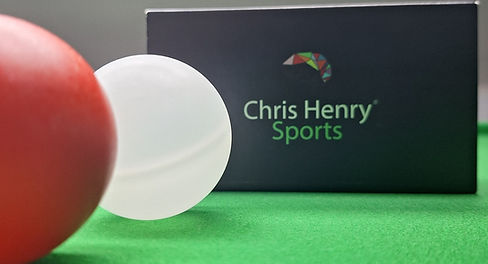
The Balls
Diagnostic tool
Developed by Chris Henry, The Balls enables objective analysis of alignment, visual habits, pre-shot routine and cue action. The tool reveals blind spots and helps develop effective and efficient habits — in both mechanics and visuals.

The Spotted White
Immediate feedback tool
During focused practice, The Spotted White provides immediate visual feedback on the point of contact on the cue ball and what happens during execution. This allows the player to recognise patterns, make adjustments and develop more reliable habits while practising.